
Brevard Weekly Arrest Range
Start with the official BCSO Inmate Search. It hands you From Date and To Date boxes. Space them a few days apart for a three-day or seven-day arrest picture. Those ranges are reader choices, not named BCSO products. The Sheriff's Office advertises no 72-hour page or fixed blotter period.
A range also gathers arrests made by BCSO and by municipal agencies once those people enter the Brevard County Jail Complex. It misses incidents that never reach the jail. Someone cited and released, held in another county, or taken into federal custody may not appear. A sealed juvenile matter stays out too. Keep in mind that an agency's incident date can differ from the booking date the county system shows. The Brevard County recent arrests hub explains the full county booking and records path.
Read Brevard Arrest Log Entries
Work from the county record outward. Start with a broad arrest range, then narrow it only when too many results share a date or surname. The goal is confirmation. One booking should hold together across related fields, not just repeated headlines or a familiar name.
- Choose a start and end date in BCSO Inmate Search, such as three or seven calendar days.
- Review the returned booking dates and arresting agencies before opening details.
- Narrow by letters-only first and last name fields when the range is too broad.
- Use a subject number or the booking number format
YYYY-NNNNNNNNfor a stronger match. - Open the detail and compare birth date, physical description, booking history, case fields, and custody status.
- Check the Clerk’s case file for the later disposition rather than reading a booking charge as an outcome.
Need a same-day check? Turn to the Daily Arrest Report instead. The weekly arrest log serves better across several booking days, agency comparisons, and late-arriving items.
Brevard Arrest Log Fields
One BCSO detail page can pack in identity, booking, bond, charge, court, and prior-booking fields. Not every field gets filled. A blank can reflect processing or policy. It rarely means the arrest never happened.
| Entry field | How to interpret it |
|---|---|
| Name and subject number | Identity clues; confirm more than the name. |
| Booking number and date/time | The county intake record and its recorded time. |
| Released status | The public custody state when viewed, which can change. |
| Arresting agency | BCSO or the municipal agency associated with that booking. |
| Charge and offense date | Reported charges and alleged-event date, not a verdict. |
| Bond details | Type, amount, number, count, and comments where entered. |
| Case, docket, court date, judge | Links toward court follow-up when those fields are posted. |
| Booking history and photo | Earlier county bookings and a photograph on some records. |
Older county entries stay linked by subject number. Booking history works that way. It ties prior arrests to one person's file. Use the Brevard Clerk case search to follow case numbers and court outcomes. "Disposition" is the court's current or final resolution. It can differ sharply from the day-one arrest log entry.
Brevard Weekend Arrest Posting
No schedule exists for weekend or holiday posting. The booking portal publishes on its own track. Arrest intake continues while web pages and court fields update separately. The Eighteenth Judicial Circuit's first-appearance rules cover court sessions and paperwork cutoffs. They say nothing about the BCSO feed's refresh rate. So court rules won't predict when a weekend booking appears online.
A multi-day range solves one practical problem. One search then covers the whole weekend. When the exact booking time is unclear, search the arrest date plus the days on either side, because someone arrested late at night may get a timestamp after midnight. A news story may run the next evening.
Note: Publication date, arrest date, booking date, and court date can all differ, so match each date to the event it actually describes.
Brevard Arrest News Blotters
Even without a named weekly blotter from the Brevard County Sheriff's Office, local newsrooms fill the gap with arrest coverage of their own. Space Coast Daily runs county arrest stories on a steady basis. Space Coast Rocket tends to post its arrest roundup the evening after bookings happen. Hometown News Brevard has published an arrest report by edition, grouping items under each agency. Treat these as editorial copies rather than official rosters, since their timing follows newsroom schedules and not the Sheriff's. The Space Coast Rocket arrest page shows that prior-day rhythm clearly.
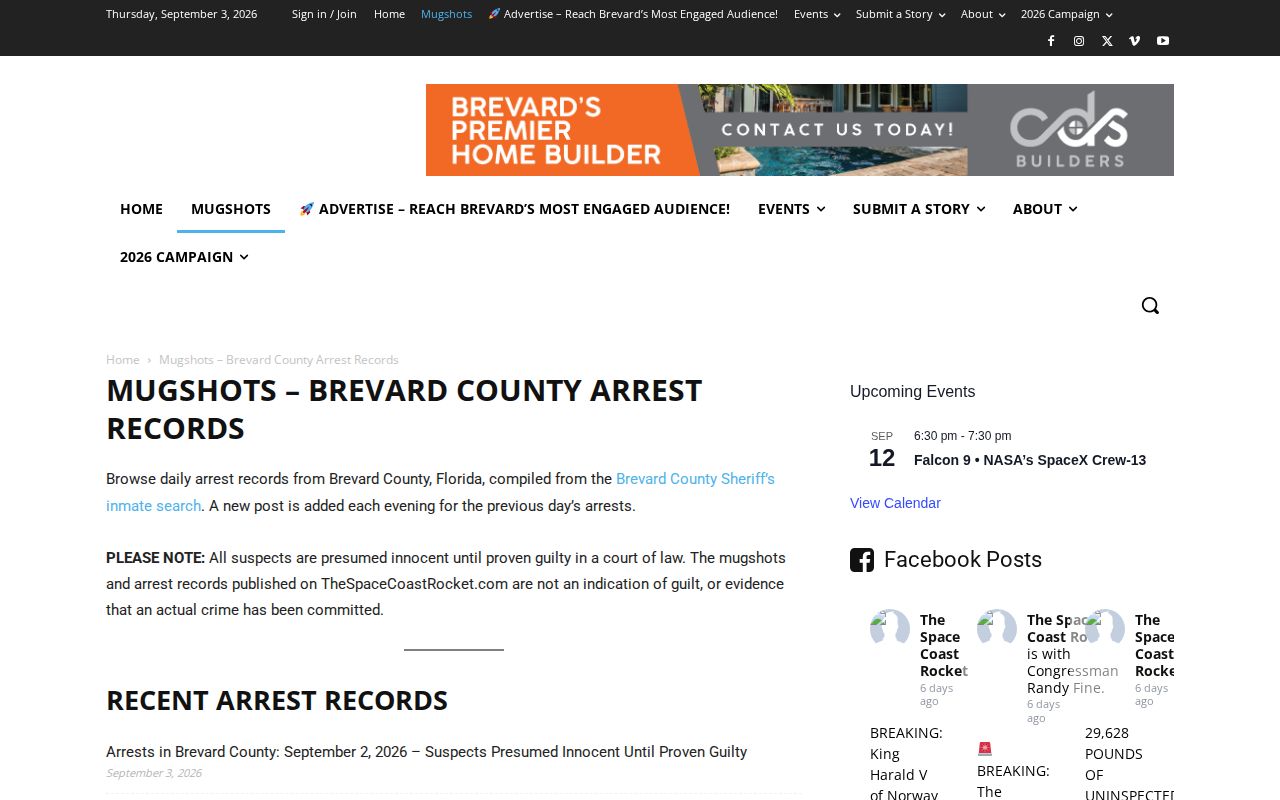
An outlet's arrest page shows layout and timing, nothing more. It is not a BCSO roster. Check its photos and text against official booking identifiers. A representative Hometown News arrest report shows the agency-grouped format. That grouping helps locate a county entry. Melbourne, Palm Bay, and Titusville items sit there too. Its issue date can still trail the arrest and booking dates by days.
Brevard Arrest Archives Compared
Private county pages can show a longer visible history than a current official query. Depth is not accuracy. Recently Booked frames a 30-day Brevard view. Mugshots.zone posts recent-looking county entries. Those copies can sit stale, attach to a namesake, or linger online after the official record changes. Search the official BCSO range first. Then compare exact dates, agency, identifiers, and case information against what the Recently Booked Brevard section displays as its unofficial multi-day archive.
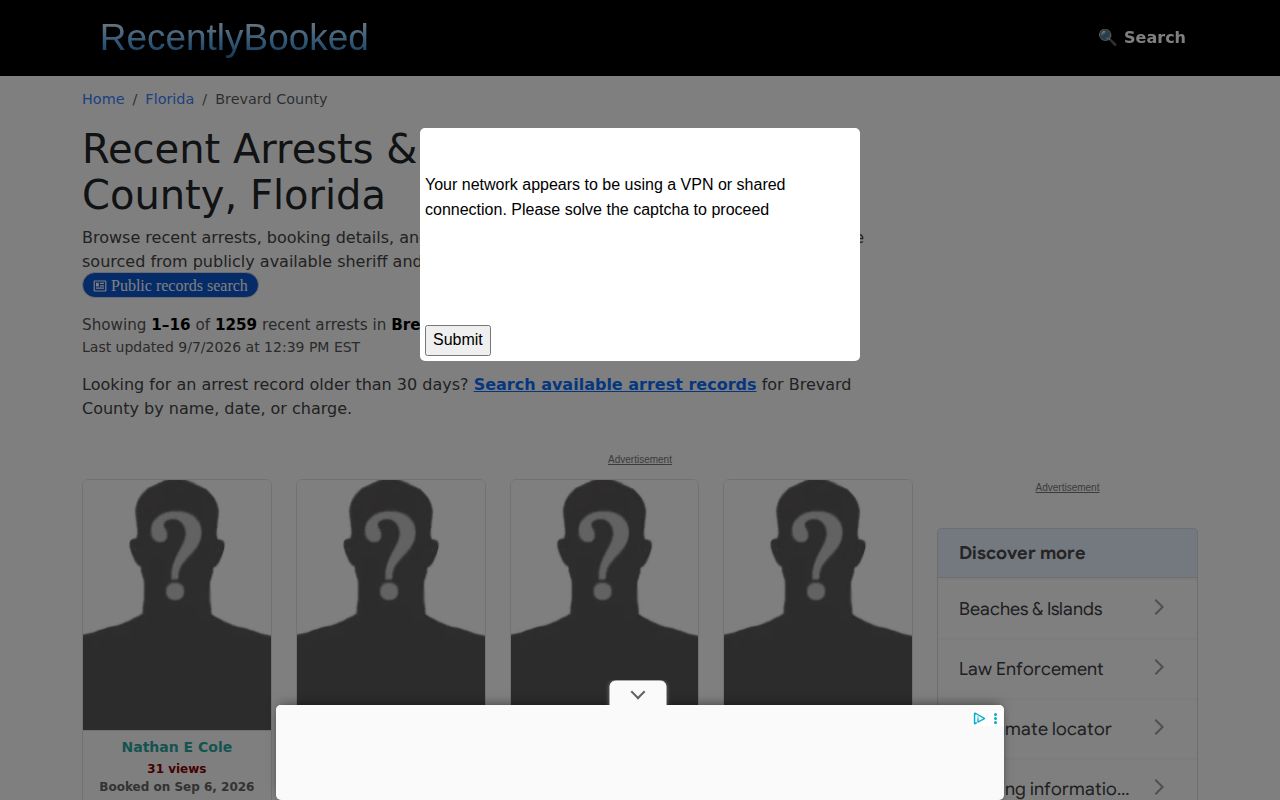
BCSO does not maintain this secondary display. Its stated window and refresh notices describe the vendor, not the county portal. The Mugshots.zone Brevard page is another unofficial archive example.
Current-looking entries can still be incomplete or wrong. Check them against the official BCSO record.
Brevard Arrest Records Afterward
BCSO keeps no fixed online archive depth. No separate roll-off repository exists either. So when an older entry vanishes from view, that says nothing about deletion. It also says nothing about sealing or expungement. Florida's General Records Schedule GS2 sets minimum retention periods for agencies. Web access is a different matter. The paper trail can legally outlive the search result by years.
Specific items in the schedule matter here. Item 16 covers booking records, held at least one anniversary year after release. Item 22 covers 24-hour commitment and release lists on the same minimum. Item 53 extends that rule to inmate incarceration records. Jail Docket Books under Item 61 stay permanent. Retention rules govern records management, not whether any mugshot or detail stays searchable online.
Need something outside the visible range? File a focused request through the JustFOIA portal or the BCSO public-records route. Give the full name, a date range, and the booking number if known. Add the exact record or image sought. The arresting city agency holds the arrest report itself. The Clerk holds the later case record. A person who moved into state prison falls under FDC custody records. Federal and immigration custody each require their own locator.
Note: Retention, search visibility, news publication, and private-site persistence run on separate timelines under different custodians.
Brevard Arrest Log Safeguards
Treat the weekly arrest log as a finding tool, nothing more. A charge is whatever booking entered that day. It can be reduced, amended, or dismissed later. The same goes for a booking photograph. Similar names and recycled copies circulate widely, so identifier checks matter before you act on any entry.
Confirm the booking through BCSO. The jail line confirms current county custody. The arresting agency supplies its own report, and the Clerk holds the disposition. A released label alone says nothing about outcome. Nor does a bond amount prove anyone walked free. Verify each layer separately.